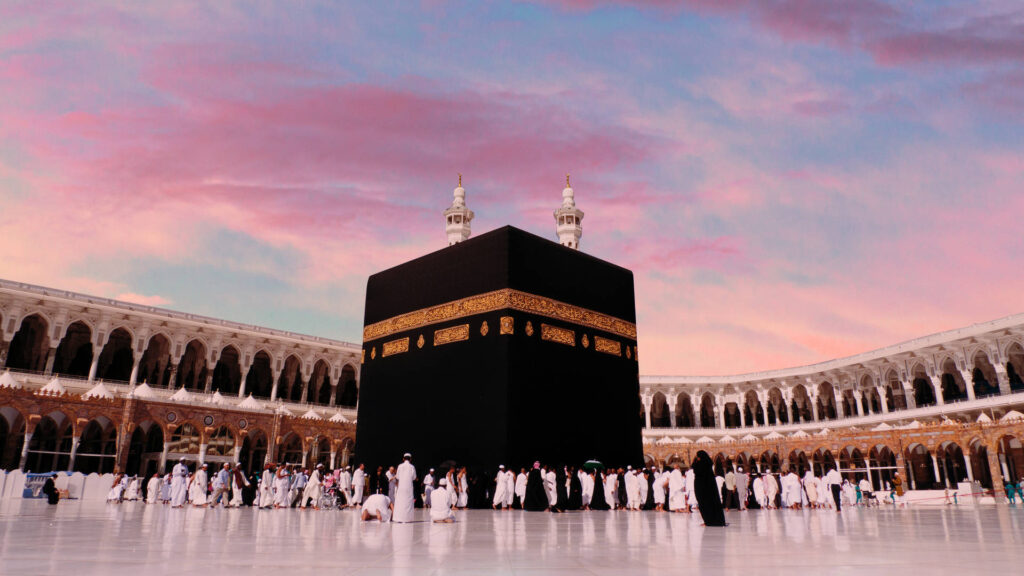
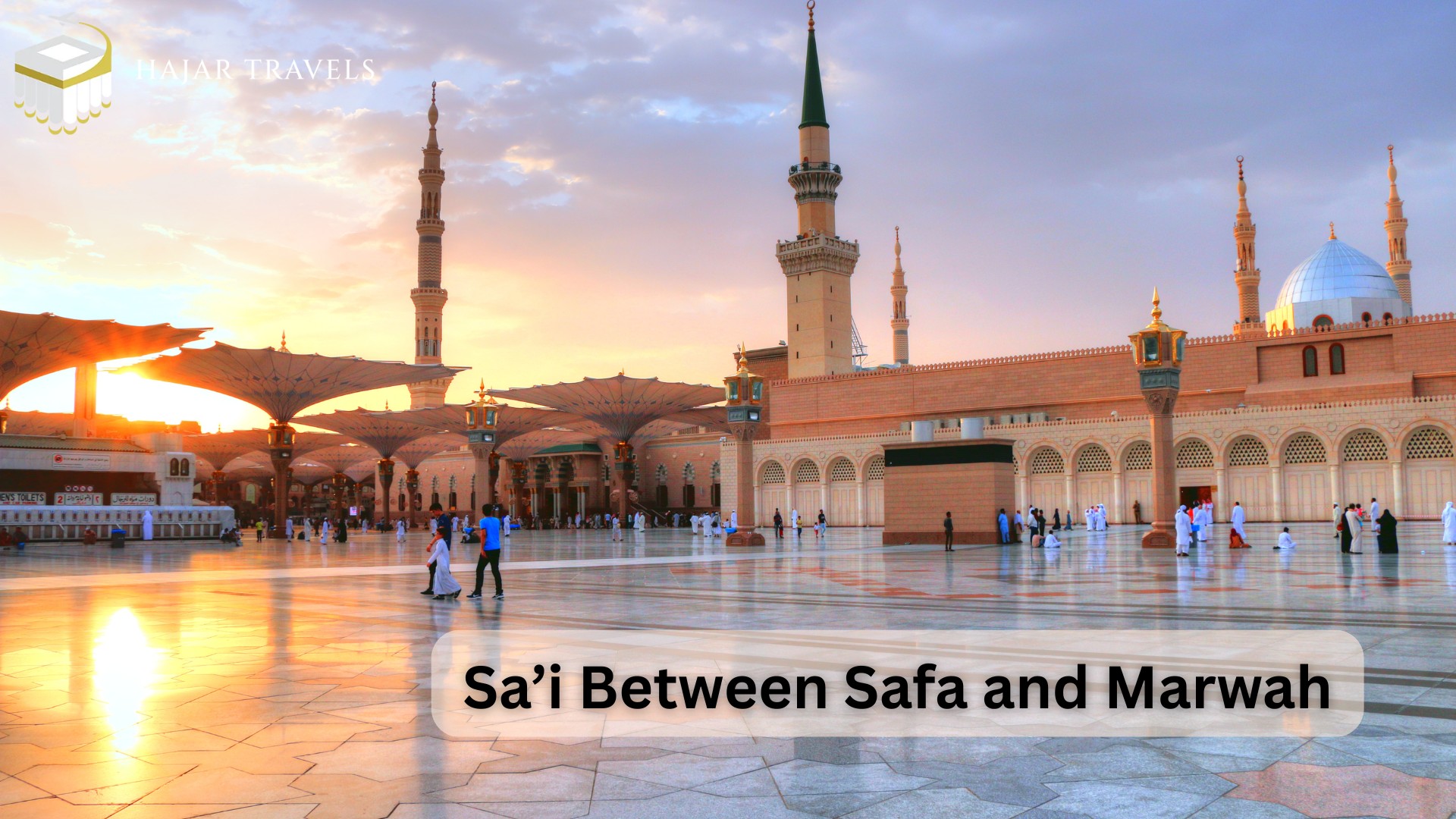
The pilgrimage to Mecca is a once in a lifetime experience to millions of Muslims across the world. Doing either Hajj or Umrah, it is an intense combination of body work and inner spiritual meditations. When you enter the Grand Mosque, you fall in love with the view of the Kaaba, however, the pilgrimage is not only about tawaf (circumambulation). It involves returning to the actions of one of the hardest women in history.
The pilgrimage involves the ritual called Sa'i which is part of pilgrimage and it signifies struggle, hope and divine intervention. It is a physical exercise which requires stamina, but it gives a spiritual cleansing and few other activities can offer it. The history, and the mode of this rite, are vital to every pilgrim who is going to visit the Holy City.
The Legacy of a Mother’s Struggle
To establish the significance of Umrah ritual we take into account a story of Hajar (AS), the wife of Prophet Ibrahim (AS). Hajar was much put to the test when she got stranded in the barren desert valley of Mecca surrounded by her baby son Ismail. She never fell to desperation, when their water ran out, and her child cried of thirst. Quite the contrary, she was moving, seeking help, rushing to this side of the hill to that, in search of a brook of water or a passing train of traffic. She is the maid of Umrah by her indefatigable struggle. A significant portion of the population will be interested in Umrah Packages 2026 USA by 2026 to participate in this most spiritual journey.
This desperate, religious quest was what made the Sa'i tradition between Safa and Marwah. Hajar ran around these hills seven times but he never gave up hope in the mercy of Allah. Her patience was paid off when angel Jibreel hit the earth and Zamzam miraculous water sprang out- water that is still used to date to quench the thirst of millions of people today. Pilgrims who practice Sa'i are giving her unquestioning loyalty (Tawakkul) and her unwillingness to surrender, even when she is in the most severe conditions.
Understanding the Ritual: What is Sa’i?
The linguistic meaning of the word Sa'i is striving, walking or hunting. It is the term used in the context of Hajj and Umrah to mean walking back and forth seven times between two hills, one of which is Safa and another one is Marwah all within the Masjid al-Haram in Mecca.
The length of the Sa'i as a whole is not much more than 3.15 kilometers (1.96 miles), and the distance between the hills is about 450 meters. Although the hills were formerly in the open open air, they are now closed in a long air-conditioned gallery of marble floors in order to admit the millions of pilgrims who come there each year. However, the spirituality of the act is not diminished even though the act is increasingly comfortable in the modern world.
Step-by-Step Guide to Performing Sa’i
As a way of making your Umrah or Hajj valid, it is important that you do Sa'ai the right way. The following is a step-by-step account of how to go on this holy walk.
Preparation and Intention (Niyyah)
Sa'i is performed after Tawaf. Having completed all the seven roundings around the Kaaba and two Rakaat prayers at the Maqam Ibrahim it is better to drink Zamzam water and then continue on the hill of Safa. In coming to the hill repeat the verse below of Quran:
One can see that As-Safa and Al-Marwah are part of the Symbols of Allah. It is, therefore, not a sin on him who can come to visit Hajj or 'Umrah of the House to make the going (Tawaf) between them. And he, who does of choice good, then Allah is All-Recogniser, All-Knower. (Surah Al-Baqarah, 2:158)
Starting at Safa
Near the Kaaba climb up the hill of Safa until the Kaaba can be seen (when it is visible, the horizon distances between buildings and people also change with constructions and crowds). Turn and face the House of Allah, and implore Him and glorify Him. Certain prayers to be recited are sunnah here, in which one professes the oneness of Allah. You have your intention (Niyyah) to carry out Sa'i in the name of Allah.
The Walk Toward Marwah
They start walking to Marwah their journey starting at Safa. The path is clearly marked. You must walk like a normal person and you must do Dhikr (remembrance of Allah), do Quran or do your own Duas.
The Green Lights (Milayn al-Akhdarayn)
As you go through the corridor, there is one section that will have fluorescent lights that are green on the wall and the ceiling. This is where it takes note of the valley floor where Hajar ran faster due to the low point. In this part, men must run or jog in medium speed so that they can feel her predicament. Women must continue to walk slowly. You go past greenlights and men are walking normal again.
Arriving at Marwah
The completion of one lap is the completion of Marwah. Like Safa, you are expected to face towards the Kaaba (though it is not visible), raise your hands and say Dua. This will be the conclusion of the first round.
Completing Seven Laps
You shall back, and go to Marwah to Safa. This counts as the second lap. You keep on doing this back and forth until you have a total of seven laps made.
- Lap 1: Safa to Marwah
- Lap 2: Marwah to Safa
- Lap 3: Safa to Marwah
- Lap 4: Marwah to Safa
- Lap 5: Safa to Marwah
- Lap 6: Marwah to Safa
- Lap 7: Safa to Marwah
The ritual never presents itself in another place except at Marwah. Once it is done, it is advisable to end with two rakat prayer, which is not compulsory.
Spiritual Lessons from the Hills
The act is physically strenuous, particularly following the Tawaf exertion but the teachings are priceless.
Patience and Perseverance
The believers are taught to take hope when relief succeeds a long struggle as Hajar had not found water on the first, second or sixth attempt he made. The repetition of the walk is the teaching of patience. We have been accustomed to things working out in our day to day lives but Sa'i informs us that Allah is never in a hurry.
The Status of Women
One of the significant pillars of the Islamic pilgrimage is deep as it mimics the movements of a woman. It discusses the Islamic view of women as being of a high status and appreciates motherhood. Every one of the Kings, scholars and commoners who visit the Hajj, must walk in the footsteps of a lonely mother in the desert.
Practical Tips for a Smooth Experience
You want to make sure that you do not let physical discomfort distract you and stick to worship times so here are some useful tips suggested by the staff of Hajar Travels.
Footwear Matters
Although most people walk around without shoes, the marble may prove to be rough to the feet beyond 3 kilometers. Thin-soled socks or soft leather slippers (khuffs) may be a good choice because it is possible to provide grip and protection without being bulkier.
Hydration
Even though the corridor is air-conditioned, there is heat created by the crowds of people and physical activity. Use the coolers of Zamzam that are found along the route.
Timing
When you are doing voluntary Umrah, then you should attempt to schedule your Sa'i to the wrong times (that is, in the middle of the night or in the middle of the day) to get clear of the most crowded times.
Wheelchair Access
There is also a central wheelchair lane that is used by the elderly or people who have mobility problems. Electric carts too can be rented at the upper levels.
Preparing for Your Journey
Umrah may be physically and spiritually traumatizing in terms of preparation. When it comes to finding out how to use the Duas, to making sure that your travel arrangements are made without any complications; every detail matters. We are confident that the more one learns about the history of the rituals, the more the process will be enhanced at Hajar Travels and make this trip a transformation. Be it in case you are apprehensive about the physical requirements or are just keen on ensuring that you are doing the Saunah right, a knowledgeable guide would always help when you are doing the Sa/i between Safa and Marwa.
Embracing the Experience
We walk in-between the hills in an adventure of fear or nervousness, of want to abundance. It is re-enactment of Godly grace that comes down to a faithful servant. Always in case you are passing by the corridor, keep in mind that you do not only walk on the marble floors but on the path of history, faith and hope. May your Sa'i and thy work be beneficial, thy heart with the peace of Zamzam.